
 ChatGPT
 Claude
 Perplexity
 Gemini
What would it look like when you fix them?
Most business owners have a nagging sense that things could run more smoothly. The problem is that when you’re busy running the business, there’s rarely time to step back and work out where the friction is actually coming from.
Below are five of the most common signs that a business has outgrown its current processes, along with a real example of what it looks like when those processes are fixed properly.
Sign 1
You’re entering the same information in more than one place
If your team is copying client details from one system to another, or filling in the same fields across multiple platforms, that’s one of the clearest signals that something can be automated.
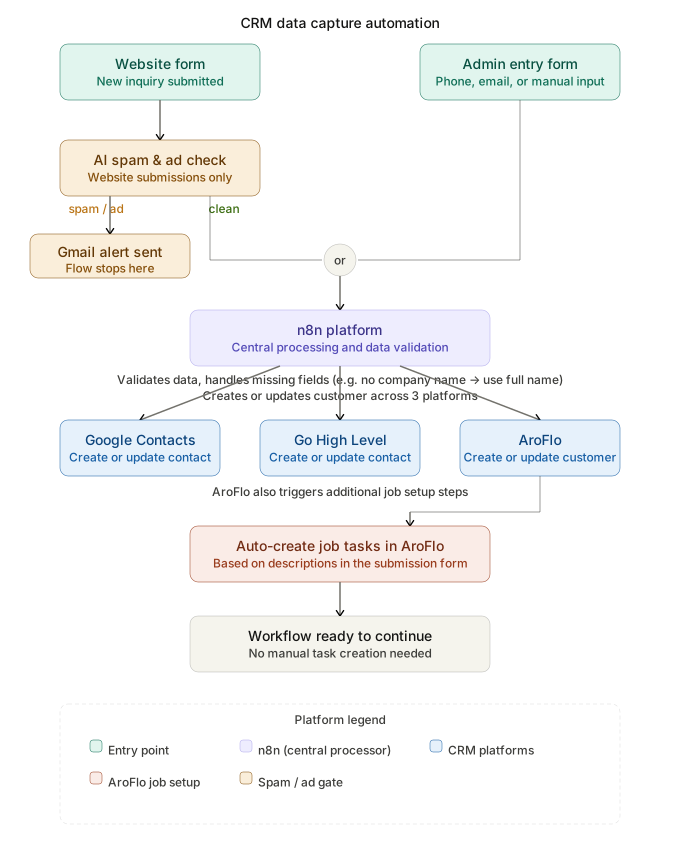
For Hills Electrical, every new client required manual data entry across three separate platforms. Staff were duplicating the same information for every new job, which was time-consuming and prone to inconsistency. Spark built an automation that connects their website enquiry form to a central processing platform.
Feature:
Before the system does anything with an enquiry, it runs a spam check.
Not every form submission is a genuine lead. Bots, test entries, and junk submissions can create false records and wasted follow-up tasks. To catch these early, the automation uses Gemini AI to analyse each incoming contact against a custom system prompt that defines the specific red flags to watch for. Anything flagged is discarded on the spot. Only clean enquiries move forward to record creation and job task generation.
A second input path handles enquiries that come in by phone or email. Whichever path is used, the system automatically creates or updates the client record across all three platforms at once, and generates the initial job tasks so the team can get started immediately. The data gets entered once. Everything else takes care of itself.
Sign 2
Regular tasks depend entirely on someone’s time and memory
When a recurring task relies on a person to remember to do it, format it correctly, and send it at the right time, you’ve got a process that’s one busy week away from breaking.
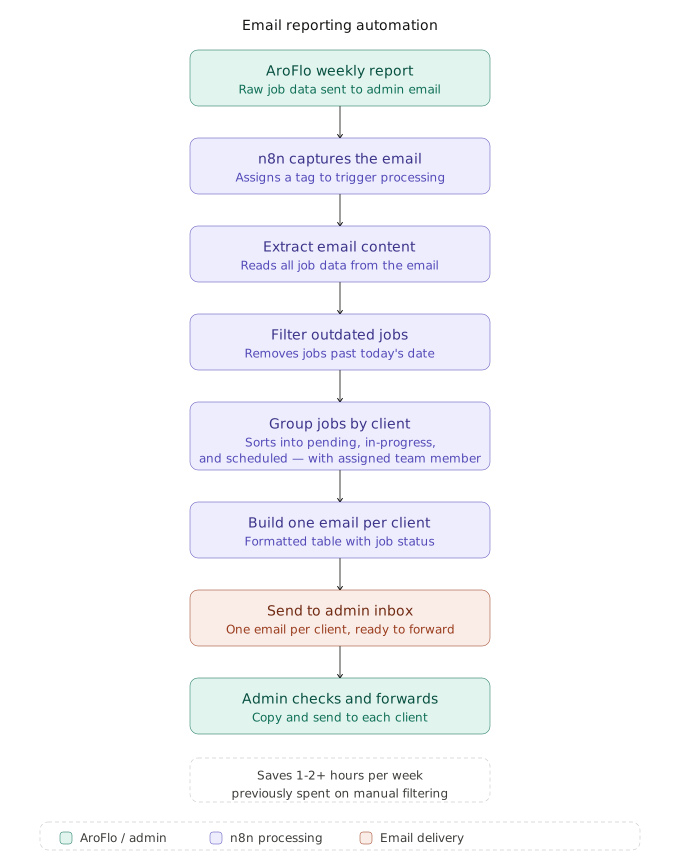
Hills Electrical sent weekly status reports to a large number of clients. Previously, this meant manually filtering raw data, pulling out the relevant jobs for each individual client, formatting the information, and sending it one by one. It was a significant time drain every single week.
The automation now captures the weekly data, filters out past-due jobs, organises the remaining information by client, and generates a clean formatted email for each one showing pending, in-progress and scheduled jobs along with the assigned team member. The admin’s only job is to review and hit send. Estimated time saving: one to two hours per week, likely more.
Sign 3
Your tools don’t talk to each other
When your job management platform, your CRM, your file storage and your communication tools all hold separate information, you end up with a business that runs on manual transfers and a lot of copy-pasting. Information gets lost. Errors creep in. Time disappears.
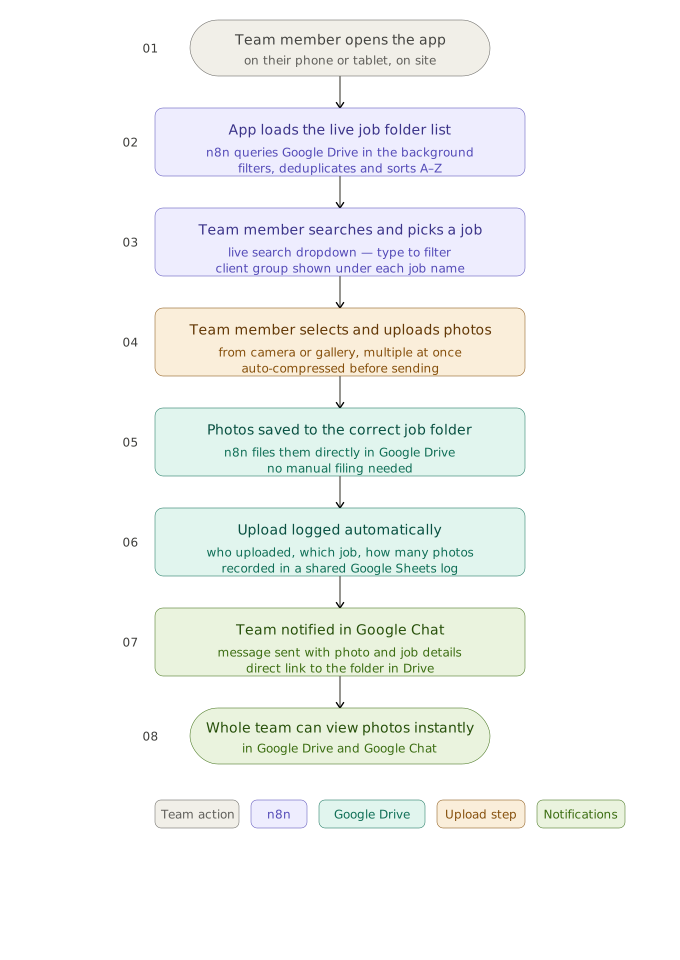
Hills Electrical’s field team were sharing job photos via WhatsApp. Someone then had to find the right customer folder and upload them manually. Photos ended up in the wrong place and time was wasted chasing them down.
Spark built a branded web app that works on any phone or tablet. Staff take or select a photo, choose the correct customer folder from a live dropdown, and submit. The image lands in the right place automatically, a subfolder is created if it doesn’t exist, and a notification goes to the team so everyone can review it straight away.
Sign 4
Your processes haven’t kept pace with your growth
What works at five clients doesn’t always work at fifty. Many growing businesses find themselves still running on the same systems and habits they had when they started, just with more jobs, more staff and more pressure.
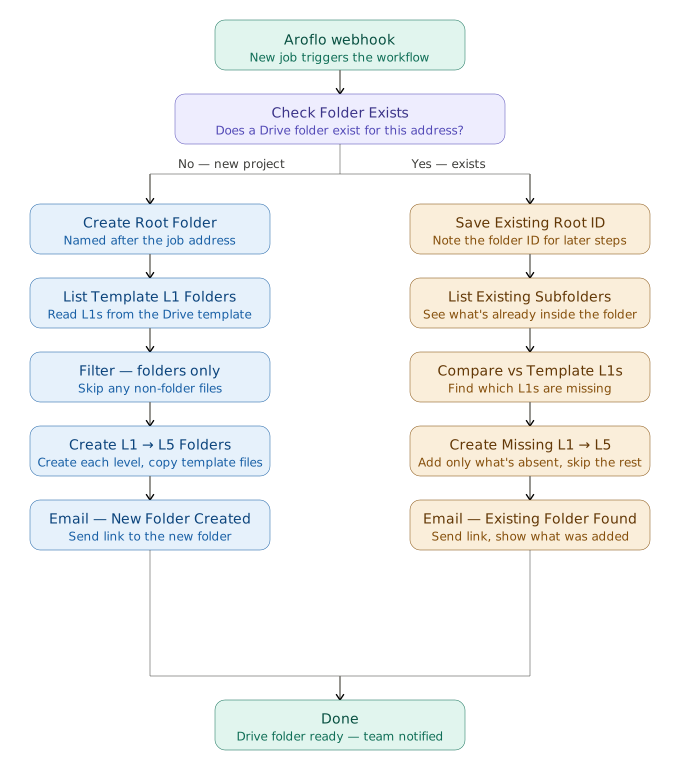
For Hills Electrical, setting up a new job folder across three separate business divisions had become a genuine time cost on every new job. When a job is set to in-progress, the system now triggers automatically. It checks whether a folder already exists for that client. If it doesn’t, it creates the full folder structure and copies all standard job templates into it. If the client already exists, it checks for any missing templates and adds only what’s needed. The admin receives an email with a direct link to the new folder. What was a manual task across three divisions now happens without anyone lifting a finger.
Sign 5
Your team’s time isn’t going where it should
The clearest sign a business has outgrown its processes is when capable people are spending their day on tasks that don’t need a human. Not because the work isn’t important, but because it could be handled automatically.
Hills Electrical now has a connected, automated workflow that reduces manual data handling, keeps client information consistent across all platforms, and means their team can focus on the work that actually matters. The result is a better experience for both their clients and their staff.
“Since Spark built our automations, our weekly customer communications have been transformed. We now have a streamlined, consistent approach that keeps us up to date, and our customers have responded positively. It has made a real difference in how we plan our weeks.”
Peter Hill
Director, Hills Electrical
Is your business showing any of these signs?
Automation doesn’t have to mean a big project or a big budget. For most businesses, the wins are sitting in the everyday. The follow-up that doesn’t get sent, the data that gets entered twice, the process that made sense at ten clients but creaks at fifty. If any of that sounds familiar, we’d love to have a conversation.