

Building a strong brand is like piecing together a puzzle. Every piece matters, but two stand out as absolutely essential: brand identity and brand awareness. These two elements work hand in hand to create a brand that not only looks good but also resonates with your audience and stays top of mind.
Brand identity is the foundation—it’s what defines who you are and what you stand for. Brand awareness, on the other hand, is how that identity spreads and sticks with people. Together, they form the bedrock of a successful brand strategy, driving everything from customer loyalty to market growth.
Curious how they differ and why both are crucial? Let’s break it down.
What Is Brand Identity?
Think of brand identity as your business’s personality. It’s how you want people to see you—the image, the vibe, and the story you present to the world. It’s the curated mix of elements that make your brand recognisable, relatable, and unforgettable.
Here’s what’s in the mix:
Visuals
Your brand’s visuals are its visual signature—the first things people notice and the easiest to remember. This includes logos, colours, fonts, and design.
Coca-Cola: A bold red and white logo that screams energy and excitement, creating instant recognition worldwide.

Apple: Sleek, minimalist packaging paired with clean typography conveys sophistication, innovation, and simplicity.

Spotify: Vibrant green tones and a simple yet distinct logo highlight accessibility and youthfulness.

Your visuals should align with your brand’s personality and make it easy for people to identify you at a glance.
Messaging
Messaging is how you talk and what you say. It’s the words, phrases, and ideas that communicate your brand’s essence.
- Old Spice: Playful and cheeky, their messaging resonates with humour and boldness.

Deloitte: Professional and trustworthy, their tone reflects authority and expertise in the corporate world.

Nike: “Just Do It” inspires action and determination, encapsulating their brand’s mission.

Your tagline, mission statements, and overall brand voice form the foundation of how customers perceive your brand’s purpose and personality.
Value
Your values are the guiding principles behind your brand. They define what your brand stands for and why it exists.
Patagonia: Committed to sustainability, Patagonia’s values resonate with environmentally conscious customers.
Ben & Jerry’s: Advocating for social justice, they align their business practices with larger societal goals.
TOMS: Focused on giving back, their “One for One” model has become a key part of their identity.
These values not only build deeper connections with your audience but also differentiate you in competitive markets.

Tone of Voice
Your tone of voice determines how your words feel to your audience. Is your brand formal, friendly, quirky, or inspiring?
Mailchimp: Informal and approachable, appealing to small business owners.
The Economist: Analytical and intellectual, targeted at readers seeking depth and insight.
Disney: Whimsical and magical, embodying the brand’s promise of storytelling and wonder.
Your tone sets expectations for interactions and reinforces your brand’s personality in every communication.

Imagery and Style
Imagery and style encompass the photos, videos, and graphics you use to visually convey your brand story.
Airbnb: Warm and inviting visuals showcasing real homes and people, emphasizing belonging.
GoPro: High-energy action shots that highlight adventure and the thrill of life.
Starbucks: Cozy and consistent imagery that evokes comfort and community.
The right imagery ensures your brand’s visual narrative aligns with its core identity.
Customer Experience
Customer experience is how people feel when they interact with your brand—whether online or offline.
Amazon: Seamless and efficient, with a focus on convenience and speed.
Zappos: Exceptional customer service that exceeds expectations, earning loyal customers.
Tesla: Futuristic and luxurious, reflecting innovation and cutting-edge technology.
Every touchpoint—from your website to customer service—should reinforce your brand’s identity and values.

The Core of Brand Identity
Brand identity is what you create. It’s your brand’s DNA—the unique blueprint that sets you apart from the competition and tells the world who you are. By crafting a cohesive and compelling identity, you ensure your brand becomes recognisable, relatable, and unforgettable.
What Is Brand Awareness?
Brand awareness, on the other hand, is all about recognition. It’s how familiar people are with your brand and whether they associate it with the right things. Think of it as your brand’s reputation out in the wild—what people say about you when you’re not in the room.
Benefits of Brand Awareness
When you’ve nailed brand awareness, people:
Recognise Your Logo or Name Instantly
Your logo or name becomes a shortcut for your brand.
McDonald’s: The golden arches are a universal symbol of fast food, easily recognised even from a distance.
Nike: The iconic swoosh communicates athleticism and innovation in one glance.
Coca-Cola: Their classic script and red colour evoke nostalgia and refreshment.
This instant recognition ensures your brand stays top of mind.
Associate Your Brand with the Right Qualities
A strong brand creates a clear connection between your name and specific attributes.
Mercedes-Benz: Synonymous with luxury, performance, and reliability, making it a go-to for high-end consumers.
IKEA: Affordable, fun, and functional—a brand known for delivering practical solutions for everyday living.
Disney: Family-friendly and magical, evoking joy and wonder for audiences of all ages.
This association reinforces your positioning in the market and aligns your brand with customer values.
Build Trust to Outshine Competitors
Brand awareness fosters trust, which is critical in competitive markets.
Amazon: A trusted name in e-commerce for its convenience, speed, and reliability.
Starbucks: Consistent quality and service make it a favourite for coffee lovers worldwide.
Apple: Known for innovation and premium quality, Apple has earned unwavering customer loyalty.
Trust makes customers more likely to choose you, even when alternatives exist.
How to Build Brand Awareness
Consistency Across Channels
Repeated exposure to your brand elements—logo, tagline, and values—strengthens familiarity.
Ensure your branding is cohesive across social media, ads, packaging, and customer service touchpoints.
Example: Nike’s Just Do It campaign maintains consistent messaging across all platforms, reinforcing its brand voice.
Memorable Campaigns
Clever marketing creates buzz and makes your brand unforgettable.
Old Spice: Their “Smell Like a Man” campaign revitalised the brand and became a cultural phenomenon.
Coca-Cola: The “Share a Coke” campaign personalises the brand, making it fun and shareable.
Dove: Their “Real Beauty” campaign challenges stereotypes, earning both attention and respect.
These campaigns stick in people’s minds and spark conversations.
Word of Mouth
Happy customers are your best ambassadors.
A recommendation from a trusted friend or family member carries more weight than traditional advertising.
Example: Tesla relies heavily on customer advocacy, with owners sharing their experiences and driving organic growth.
Encouraging reviews, testimonials, and referrals amplifies your reach and credibility.
The Core of Brand Awareness
Brand awareness is what you earn. It’s your brand’s street cred—the intangible currency that makes people remember you, trust you, and keep coming back. By consistently delivering on your promises and creating memorable experiences, you build a reputation that lasts.
The Dynamic Duo
While brand identity is about crafting your image, brand awareness is about spreading it. They’re interconnected, and one can’t thrive without the other.
Here’s why:
Without a solid brand identity, there’s nothing for people to recognise. You need a clear, consistent, and compelling identity to make an impact.
Without brand awareness, your identity stays hidden. Even the most beautifully designed logo or clever tagline won’t matter if no one knows about it.
Think of them as two sides of the same coin. Your brand identity gives people a reason to care, and brand awareness ensures they actually notice and remember you.
| Key Comparison | Brand Identity | Brand Awareness |
|---|---|---|
| Definition | How you define and present your brand. | How well people know and recognise your brand. |
| Focus | Internal: crafting your visuals, messaging, and values. | External: ensuring your brand is seen, recognised, and trusted. |
| Examples | Logos, colours, taglines, tone of voice. | Campaigns, social media reach, word-of-mouth recognition. |
| Goal | Build a unique personality. | Gain recognition and trust. |
| Key Question | What do we want to stand for? | How do people perceive us? |
The takeaway? You need both.
A strong brand identity lays the groundwork for what makes you special, while brand awareness ensures your audience actually knows and cares about it. Together, they create a brand that’s not just seen—it’s remembered and loved.
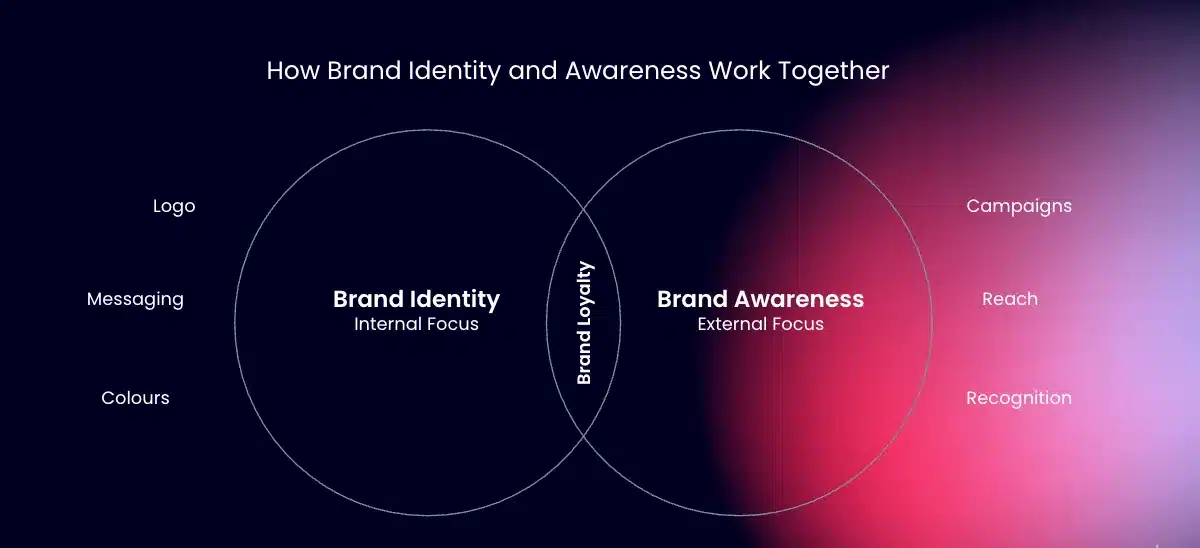
How Brand Identity and Awareness Work Together
Brand identity and brand awareness aren’t just two separate pieces of the puzzle—they’re designed to work in tandem. Here’s how they fuel each other:
Identity Drives Awareness
Your brand identity is the foundation for building awareness. A clear, consistent identity—whether through visuals, messaging, or values—makes your brand easier to remember and recognise. For example:
A striking logo paired with a catchy tagline (think Nike’s swoosh and “Just Do It”) ensures people associate the two instantly.
Unique brand values, like Patagonia’s sustainability ethos, attract like-minded customers who spread the word.
Awareness Amplifies Identity
Once your brand is recognised, awareness gives it life in the real world. When people see your identity in action—ads, social media, or word of mouth—it reinforces their understanding of who you are. Examples include:
Viral campaigns that showcase your core values, such as Dove’s “Real Beauty.”
Consistent customer experiences, like Starbucks’ personalised cups and friendly service, that strengthen recognition and trust.
Together, They Create Loyalty
The ultimate goal? Building a loyal audience that sees your brand as a trusted friend. When your identity resonates with your audience and awareness keeps your name in their minds, you create a feedback loop:
People discover your brand (awareness).
They relate to your values and personality (identity).
They choose your products and share their experiences, spreading awareness further.
Why It Matters
Here’s the kicker: both are critical for success. Your identity shapes how people perceive you, while awareness ensures they actually know you exist. Together, they:
Attract Customers
A memorable identity paired with strong awareness captures attention and drives engagement. When people recognise and relate to your brand, they’re more likely to take that next step—whether it’s clicking, buying, or sharing.
Build Trust
Consistency in your identity, amplified through awareness, fosters reliability. When customers repeatedly see the same message and quality, it reassures them that your brand delivers on its promises.
Boost Growth
Awareness fuels interest, and identity keeps people coming back. The more people know about and understand your brand, the faster you grow through loyalty and advocacy.
Strengthen Loyalty
A strong brand identity coupled with awareness creates a sense of belonging. Customers feel like they’re part of something bigger, fostering repeat business and long-term relationships.
Differentiate in a Crowded Market
Awareness ensures you’re visible, and identity ensures you’re distinct. Together, they help you stand out in industries flooded with competitors.
Drive Higher Value Perception
People are willing to pay more for brands they trust and recognise. Awareness builds familiarity, while identity solidifies quality and value.
A strong brand identity sets the stage for meaningful connections, and awareness ensures those connections flourish. Together, they’re the ultimate power duo for taking your brand to the next level.
Quick Tips to Balance the Two
Balancing brand identity and awareness is an art, but these tips will help:
Define Your Identity First
Nail your visuals, messaging, and values before shouting your name from the rooftops. A strong foundation ensures everything you do aligns with your core identity, making it easier for people to remember and trust you.
Leverage Social Media
Create engaging content that showcases your identity and reaches new audiences. From Instagram reels to Twitter threads, use platforms that align with your audience’s preferences to spread your message effectively.
Consistency Is Key
Keep your brand identity consistent across all platforms, from your website to social media profiles. This uniformity reinforces your brand’s image and builds recognition over time.
Track and Adjust
Use metrics like engagement rates, website traffic, and social mentions to gauge how well people recognise and connect with your brand. Regularly tweak your strategy based on what works best.
Collaborate with Influencers
Partner with influencers who align with your brand values to amplify your reach. Their audience becomes your audience, boosting awareness while reinforcing your identity.
Invest in Paid Advertising
Use targeted ads to expand your visibility and drive home your brand’s message. Platforms like Google Ads or Facebook Ads can help you reach the right people at the right time.
Engage with Your Audience
Respond to comments, answer questions, and show up in conversations about your niche. This two-way interaction strengthens both recognition and trust, creating a loyal community around your brand.
By balancing these strategies, you’ll ensure your brand identity shines while building the awareness it needs to thrive.
Competitive Advantage: How Identity and Awareness Work Together
Brand identity and brand awareness are more than just marketing buzzwords; they’re your competitive edge. When your identity is strong and your awareness is widespread, your brand becomes a force to reckon with.
Here’s how:
Standing Out: A clear and compelling identity ensures your brand isn’t just another face in the crowd. Add widespread awareness, and you’re the name people think of first.
Building Emotional Connections: Awareness creates the opportunity for people to interact with your identity, forming emotional bonds that lead to loyalty and advocacy.
Winning the Market: A strong identity backed by awareness ensures your brand becomes the go-to choice, outperforming competitors who lack one or the other.
At Spark, we specialise in helping brands achieve this winning combination. Our expertise lies in crafting identities that stand out and strategies that amplify awareness, ensuring your brand captures attention and earns loyalty.
Ready to elevate your brand? Contact us today and let’s spark something amazing!