 ChatGPT
 Claude
 Perplexity
 Gemini
Something has changed in how we approach website and digital projects at Spark Interact.
We’ve always worked across a range of platforms and technologies, from WordPress builds through to custom web applications. But for a long time, the bread and butter of most agency website work looked the same: a page builder, a stack of plugins, and a maintenance plan to keep it all running. Across the industry, that was the standard playbook. It worked. We got good at it. But after years of building, managing, and troubleshooting across hundreds of projects, we started asking whether the standard approach itself was the issue, not just the execution.
The first article in this series covered what we’ve been seeing: the plugin problem. This one is about where we’re taking things to the next level.
A different approach to WordPress
For projects where WordPress is the right platform, the biggest shift in our approach is moving away from page builders entirely.
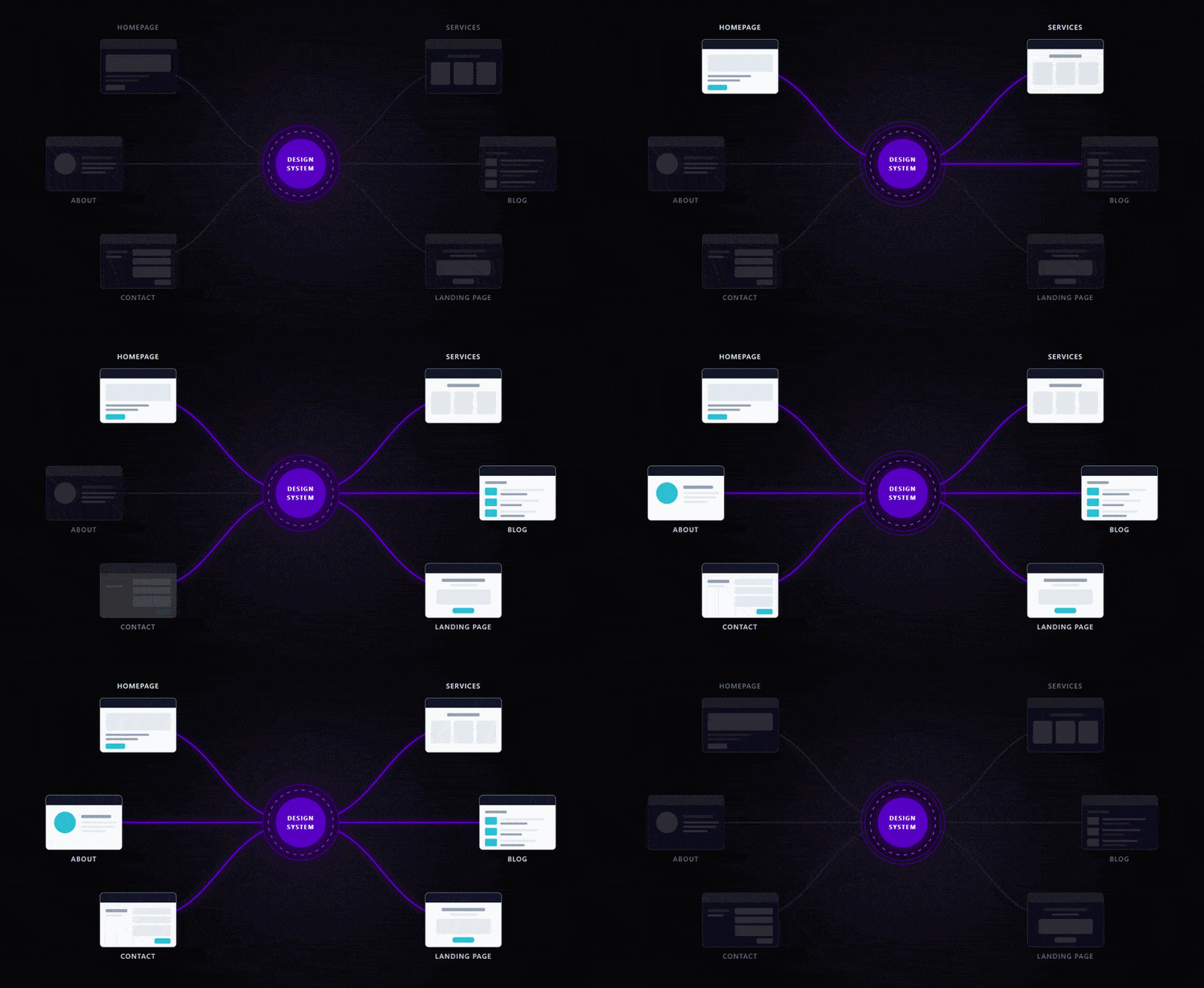
We now build custom WordPress themes from scratch, anchored by proper design systems. Before a single line of code is written, we define the complete visual language in one central place. Every colour, every font, every heading size, every button style, every spacing value, every component, all documented and coded as reusable design tokens. When a button appears on the homepage, the services page, and the contact page, it’s pulling from the same source. Change it once, and it updates everywhere.
This is standard practice in large-scale software development, but it’s remarkably uncommon in the WordPress world, where most sites are assembled page by page inside a visual builder. The result of the page builder approach is inconsistency, bloat, and a site that becomes increasingly difficult to maintain as it grows.
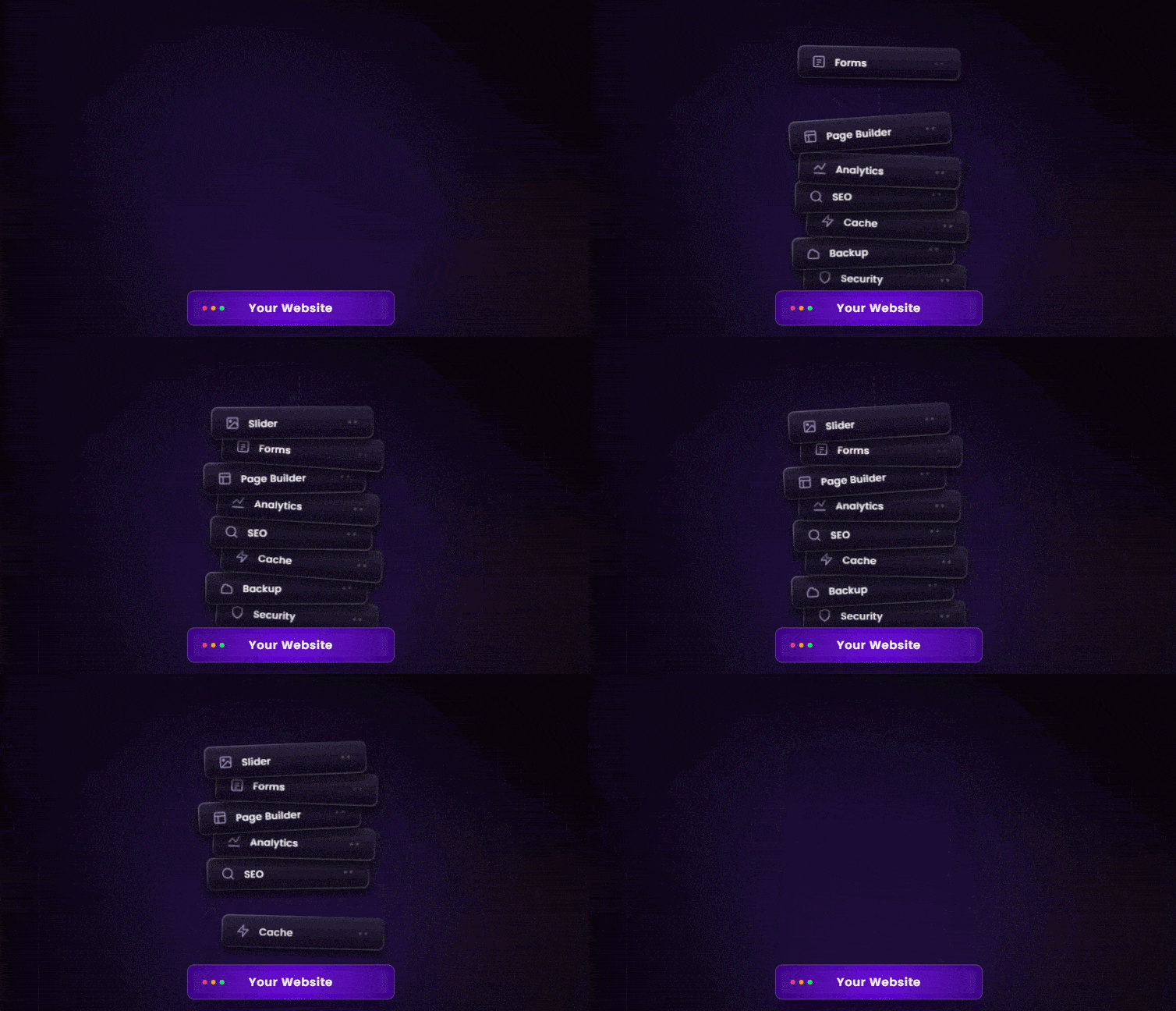
With a custom theme and design system, every page is built with clean HTML, CSS, and JavaScript. No page builder layer generating bloated code behind the scenes. No abstraction that makes the site unreadable to anyone who doesn’t know that specific builder. The pages load fast because there’s nothing unnecessary weighing them down. They’re secure because there’s no page builder plugin to become a vulnerability. And they’re maintainable because the code follows standard web practices that any developer can work with, today or five years from now.
For our clients, the day-to-day experience of managing the site doesn’t change much. Dynamic content like team members, case studies, blog posts, and client logos still works through the familiar WordPress admin. You add a new team member, set a featured image, and it appears on the site automatically through the template. No code required for routine content updates.
It’s worth noting that even Elementor’s latest version, v4, is moving back toward class-based CSS, essentially the same approach we’ve already adopted. The industry is heading in this direction. We’ve just got a head start.
InstaPage: AI-assisted page creation
One of the challenges with custom-coded sites has always been accessibility for non-technical team members. If every page is built in code, how does someone without development skills create a new landing page for a campaign?
That’s what led us to develop InstaPage, an in-house tool that bridges the gap between custom code and everyday usability. It works with the design system already defined for your site and uses AI to help non-technical team members create and update pages without needing to write code themselves.
The key thing about InstaPage is that the pages it produces are standard HTML, CSS, and JavaScript. If the tool were removed tomorrow, every page would still work exactly as it does today. It’s a convenience layer, not a structural dependency. No lock-in. No fragility.
Site Manager: our custom-built CMS
For clients who want to move beyond WordPress entirely, we’ve built Site Manager, a complete website management platform designed and developed in-house.
It started as a direct response to a pattern we kept seeing: client after client with slow, fragile, expensive-to-maintain websites, asking if there was a better way. We kept fixing those problems. Eventually we asked ourselves: what if the site just didn’t have those problems in the first place?
Site Manager was built around three priorities. It should never break, with no plugin conflicts, no failed updates, and no database errors to contend with. It should be genuinely secure, with security designed into the architecture rather than layered on top, including pushing form data directly to the client’s CRM rather than storing it on the website. And anyone on the client’s team should be able to use it without training.
The architecture is deliberately simple and vendor-neutral. If a client ever wanted to move to a different host or a different agency, the site travels cleanly with no lock-in.
Modern frameworks for modern requirements
Not every project is a content-managed website. Some clients need web applications with complex user interactions, dynamic portals, membership platforms, or integration-heavy systems that go beyond what any traditional CMS is designed for.
That’s why we’ve been expanding our capability across modern development frameworks: Next.js, Vue, React, and Laravel, among others.
Next.js and React are strong choices for applications that need fast, dynamic front-end experiences with server-side rendering for SEO performance. Vue offers a lighter-weight alternative that works well for progressive enhancement. Laravel provides a robust PHP backend for applications that need complex business logic, API development, and database management beyond what a flat-file CMS should handle.
We’re not committed to any single framework for its own sake. The decision is always driven by what the project actually needs: the client’s requirements, their team’s technical capability, the integrations they depend on, and where they expect the business to be in three to five years.
The principle behind all of it
Whether we’re building a low-plugin WordPress site with a custom design system, deploying Site Manager for a client who needs maximum reliability with minimum maintenance, or developing a bespoke application in Next.js or Laravel, the principle is the same.
The technology should serve the business. It should be stable, secure, performant, and maintainable. It should be open enough that the client isn’t locked into a single vendor or platform. And it should be built with enough foresight that it still works well as the business evolves.
That sounds obvious. But in practice, the web development industry has spent years pushing businesses toward solutions that prioritise short-term convenience over long-term resilience. Page builders that are quick to set up but impossible to optimise. Plugin stacks that add features fast but create fragile, interdependent systems. Platforms that are easy to start with but expensive and complicated to grow out of.
We’ve decided to go the other direction. It takes more upfront investment in architecture and design systems. It takes genuine R&D, which is why we’ve spent the past two years building tools like Site Manager and InstaPage alongside our regular client work. But the result is websites and applications that our clients can rely on for years, not just months.
What stays the same
None of this changes our commitment to the WordPress sites we currently manage. We run the same rigorous maintenance program we always have: daily backups scheduled between 1:00 am and 5:00 am, uptime monitoring around the clock, monthly update cycles with rollback protocols, and real-time vulnerability management. Medium and high-severity vulnerabilities get patched immediately, outside the regular cycle if necessary.
We’re not moving away from WordPress. We’re moving away from fragility.
Where to from here
The web is changing quickly. AI is reshaping how content is created and how sites are built. The tools available to developers today are fundamentally more capable than what existed even two years ago. And businesses are becoming more sophisticated about what they expect from their digital presence.
We think the agencies that will do the best work over the next decade are the ones investing in their own R&D now, rather than waiting for the next page builder to solve problems that page builders created in the first place.
That’s the bet we’ve made at Spark Interact. Every decision we’ve described across this series, from reducing plugin dependency to building Site Manager to expanding across modern frameworks, comes from the same place: years of experience managing real client websites, and a commitment to doing it better.
If your current website setup feels like it’s holding your business back rather than supporting it, or if you’re approaching a rebuild and want to understand what your options really are, we’d welcome the conversation. Not to sell you a platform, but to help you figure out the right foundation for where your business is heading.
Spark Interact is a Sydney-based agency specialising in brand strategy, web design and development, and procurement marketing. We work with businesses across construction, professional services, finance, and government-adjacent sectors.