 ChatGPT
 Claude
 Perplexity
 Gemini
The design world is changing faster than ever. With Figma’s recent Config 2025 announcements introducing tools like Figma Make, Figma Site, and Figma Slides, artificial intelligence is no longer a distant concept — it’s embedded in the tools we use daily. But what does this mean for design agencies like ours?
We recently sat down as a team to discuss these changes and how they’re shaping our approach to design. The conversation revealed some fascinating insights about creativity, efficiency, and what it truly means to be a designer in the age of AI.
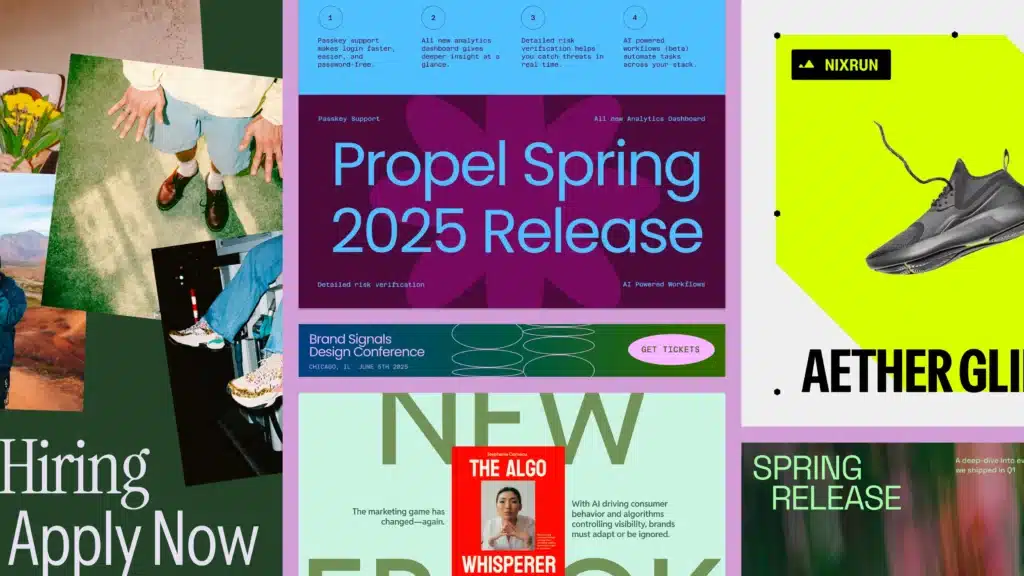
Figma Make Designs. Source: Figma.
The Reality Check: AI Tools in Practice
When we started discussing how AI tools have changed our design approach, the responses were refreshingly honest. While Figma has introduced features like AI-powered renaming and upscaling tools, our team found themselves still relying on established workflows.
“I mainly use the upscaling tool,” shared Chau, Interactive Designer. “The rename layers feature is useful as a final pass over later, but I haven’t used it much beyond that.”
The reason became clear quickly: our design process is built around custom systems. “We use our own wireframing system,” our team explained. “The AI tools that Figma provides are pretty low-level at the moment.”
This highlights a crucial point that’s often overlooked in discussions about AI in design — most AI tools are designed for generic workflows, but agencies develop sophisticated, bespoke systems that deliver better results for clients.
The Curator vs. Creator Debate
One of the most thought-provoking questions we explored was whether designers are becoming more like “curators” — directing AI rather than creating from scratch. The team’s response challenged this assumption entirely.
“AI is not intelligent, right? It doesn’t have any context. It doesn’t think about user experience, user journey. AI doesn’t do that. It just emulates what others are doing,” the Design team further pointed out. “If we’re going to use a tool like that, what’s the point of even having a design when the client can just do it themselves?”
This sparked a deeper discussion about where real value lies in design work. Our team compared AI tools to calculators — useful for computational tasks, but the real expertise lies in knowing what to calculate and then interpreting the results.

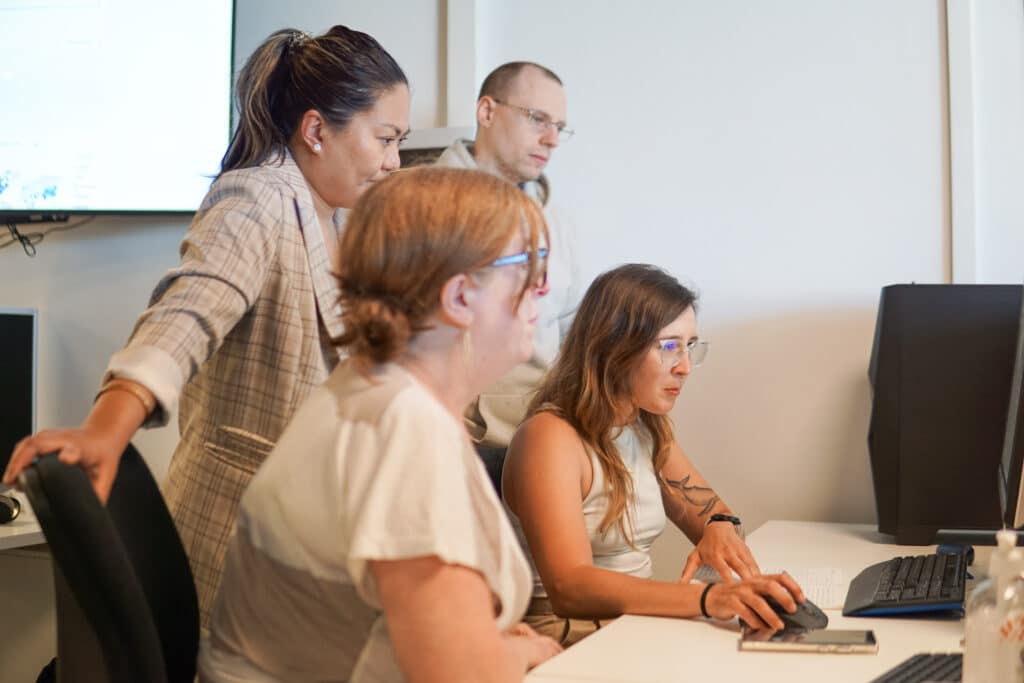
Chau, Kath, Ben and Ha-Ram during a team brainstorming session.
What Must Remain Human
When discussing which parts of the design process should always remain human-led, our team was unanimous: every part of the design process needs human oversight, but with varying degrees of AI assistance.
“I think every step should have human involvement,” our team explained. “For example, AI can give you a wireframe, but you still have to check it and see if it’s working for what you want to deliver.”
The concept that emerged was having a “human in the loop” — AI can assist with certain tasks, but can’t be trusted to deliver quality without human review and refinement. In particular, we highlighted an area where AI falls short:
“It’s not great for accessibility design — there’s not enough data out there for it to use. You need to interact with and talk to real people to design these experiences. As an example, I know someone working in accessibility design who has to sit down and talk to someone who’s blind to understand what their experience of using a self-checkout is. You can’t find that information online.”
This is a real problem. Some groups aren’t represented online at all, and if we rely on tools like AI to create digital experiences, they’ll only continue to be excluded. This human element — understanding real user needs, business contexts, and unique challenges — is where agencies create genuine value that AI simply cannot replicate.
Kath, Aimee, Ben and Marcela reviewing a design project.
The Skills Revolution
As AI becomes more prevalent, what new skills will designers need? The discussion revealed some surprising insights about the complexity of working with AI tools.
“Prompting is definitely important,” noted Mac, Marketing Specialist, who’s been working extensively with AI image generation. “At the end of the day, you have to really instruct the machine to do it the way that you want by providing adequate context and relevant images.”
But the skill isn’t just about writing prompts. “If you generate an image of a tree, you have to define what type of tree, how many leaves, what season, what colour leaves, what’s the lighting, is it taken on an iPhone camera or Leica camera, film or digital…” The level of detail required is extensive.
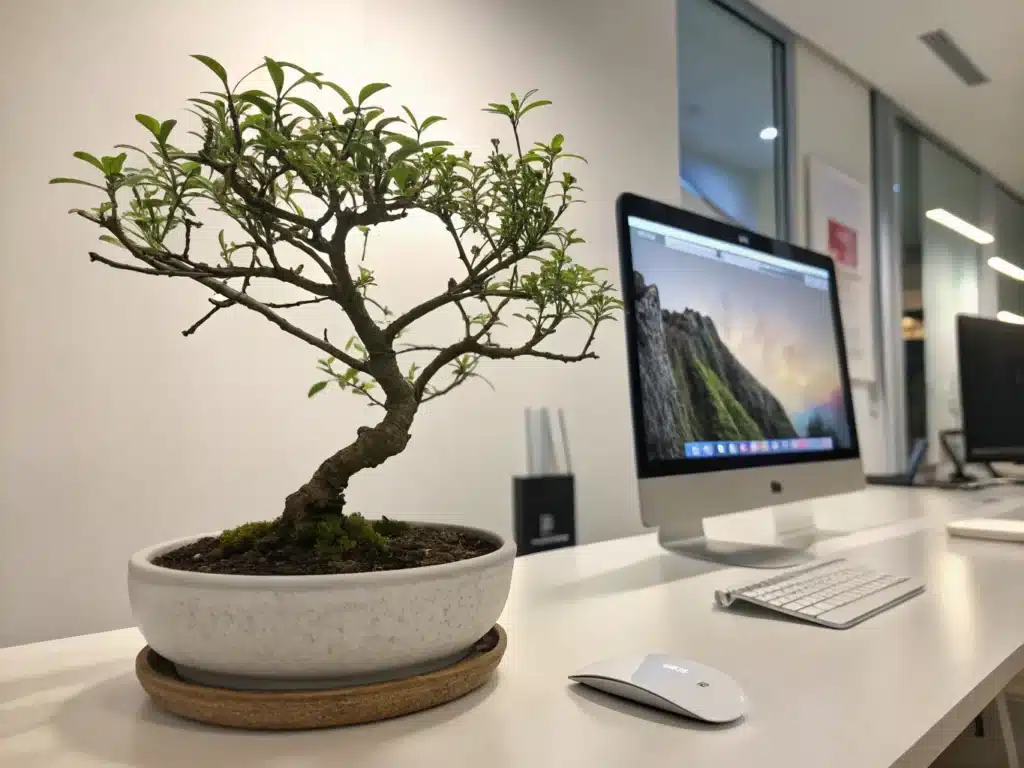
Image generated with Gemini AI.
This led to an interesting realisation: “It all comes back to writing skills and subject expertise. You need to know how to precisely explain what you want.” Rather than making things simpler, AI tools require designers to become more articulate and specific about their creative vision.
The Human-Centred Difference
What emerged from our discussion was a clear positioning: while AI can handle certain repetitive tasks, the real value lies in human insight, creativity, and strategic thinking.
“Right now, retro design language is trending,” Marcela, Experienced Designer, noted, drawing parallels to how Apple is returning to skeuomorphic design elements. “A lot of people appreciate craftsmanship. There are still people who appreciate that because AI-created stuff doesn’t have a lot of effort behind it.”
This observation led to our key differentiator: “How can we make clients appreciate the work and craftsmanship in everything we do when delivering their work?”
The answer isn’t about hiding AI use or over-explaining our process. It’s about demonstrating the strategic thinking, user research, and creative problem-solving that goes into every project.
Brand Refresh Project Spark completed for client Liverpool Catholic Club.
Looking Forward
As AI tools continue to evolve, our team believes the design industry is heading toward greater specialisation and higher-level thinking. “Everything’s just gone up a level,” one member explained. “You cannot just keep doing average things. You’re being forced to think even more.”
As an AI and automation agency, this means doubling down on what we do best: understanding client businesses, solving unique problems, and creating designs that genuinely serve user needs. AI might help us work more efficiently, but it won’t replace the strategic thinking and creative insight that define great design work.
The future of design isn’t about choosing between human creativity and AI assistance — it’s about thoughtfully combining both to deliver better outcomes for our clients. And that balance requires more human judgment, not less.
At Spark Interact, we believe in human-centred design enhanced by technology, not replaced by it. Every project receives the strategic thinking, creative insight, and personalised attention that only our experienced team can provide.