
 ChatGPT
 Claude
 Perplexity
 Gemini
In Australia’s Tier 2 construction landscape, reputation and delivery are everything. But when the time comes to consider acquisition or succession, too many established firms find themselves undervalued—not because of their performance, but because of perception.
Rebranding is often the missing link between real capability and market recognition. It signals to investors and buyers that the business is not only operationally sound but strategically poised for growth.
From Tenders to Transition: Why Brand Matters at the Point of Sale
Buyers aren’t just purchasing contracts or cranes. They’re acquiring a legacy, a culture, and a platform for future growth. Your brand is the first thing they’ll assess—even before diving into your balance sheets.
Done right, branding can convert operational excellence into perceived value. It becomes a shortcut for trust, reducing uncertainty during due diligence.
Signs Your Construction Firm’s Brand Is Due for Evolution
Tier 2 firms frequently outpace their own branding as they scale. At Spark Interact, we often meet construction businesses whose operational capability has matured well beyond what their branding suggests. These companies are running sophisticated, high-value projects that rival larger competitors, yet the public face of the business—from the logo and capability statement to the website—hasn’t kept up.
This gap is understandable. Focus has been internal: tightening processes, improving delivery, expanding capability. But in doing so, the external presentation has been left behind.
That disconnect is what prospective buyers will see first.
If any of the following rings true, your brand may be lagging behind your business:
- Your visual identity hasn’t been updated since the pre-digital era
- You’ve moved into infrastructure or government projects but still look like a subcontractor
- Your website lacks detailed project case studies, accreditations, or team insights
- Your tenders and credentials documents are inconsistently branded
- You struggle to articulate your value proposition beyond pricing
These issues are more than aesthetic—they can directly impact your sales outcome.
Market Perception vs. Project Delivery
Tier 2 construction companies often deliver projects that rival the big names in scale and complexity. Yet, without a compelling and consistent brand narrative, this delivery excellence doesn’t always translate to external credibility.
Your brand should carry the same weight as your project portfolio.
Strategic branding helps close this gap, ensuring that potential acquirers see your business as both operationally capable and commercially polished.
Elevating Your Digital and Physical Presence
Branding doesn’t stop at your logo. It extends to every interaction a stakeholder has with your business:
- Your website should mirror the scale of your projects and the professionalism of your delivery.
- Site hoarding, uniforms, and fleet vehicles should reinforce your identity consistently across locations.
- Tender responses, investor presentations, and capability statements must reflect clarity, structure, and polish.
Consistency across touchpoints signals maturity and control—two attributes buyers prize.
Beyond Logos: The Strategic Value of Rebranding
Rebranding at the Tier 2 level involves:
- Aligning brand architecture with new service lines or sectors (e.g., D&C, early contractor involvement)
- Clarifying market positioning against competitors
- Showcasing ESG credentials in a visual and narrative format
- Integrating digital tools and communications that support post-acquisition continuity
It’s not about design alone. It’s about demonstrating that you know who you are and where you’re headed.
Rebrand with Purpose, Not Just Polish
We understand that construction leaders don’t rebrand lightly. But when it comes to planning your exit, it’s worth asking:
Is your brand working as hard as the rest of your business?
If the answer is anything short of an emphatic yes, it’s time to act.
The Strategic Timing of Rebranding
A well-timed rebrand is not a rushed exercise. Ideally, it’s initiated 12 to 18 months before a sale is planned. This gives time for the refreshed identity to permeate stakeholder touchpoints and build measurable traction.
This strategic lead time allows you to:
- Introduce new messaging to the market
- Optimise your digital assets for lead generation and credibility
- Provide buyers with a sense of operational discipline and marketing awareness
A rebrand that has matured in the market feels authentic, not staged for sale.
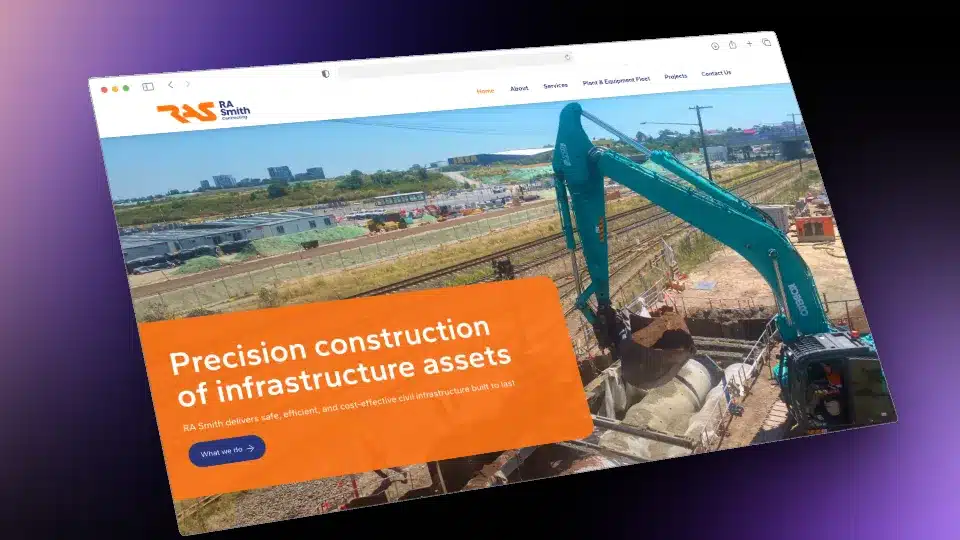
A Real-World Example: RA Smith’s Strategic Brand Rollout
A strong example of this approach can be seen in RA Smith Contracting, a long-established Tier 2 contractor with a reputation for excellence in civil infrastructure.
As the company prepared for future growth and potential investment, Spark Interact partnered with RA Smith on a comprehensive rebrand that touched every facet of their identity. This included the development of branded stationery, a professionally designed capability statement tailored for procurement and government audiences, and a modern, mobile-responsive website that showcased their work, accreditations, and team.
The rebrand also extended to their digital presence, with optimised social media profiles and ongoing branded post content—positioning the company as both technically competent and market-aware.
This transformation created alignment between the business’s proven delivery capability and its public-facing image, enhancing credibility with institutional clients and strategic partners alike.
Thinking of Selling? Start with Your Brand
There’s more capital in your brand than most balance sheets reveal. Before you open the data room or engage brokers, ensure your business is positioned to impress.
A strategic rebrand is an investment in visibility, trust, and transaction success.