 ChatGPT
 Claude
 Perplexity
 Gemini
Every year, when the Federal Budget is released, small business owners hear the same advice: speak to your accountant.
That is still the right place to start. Your accountant can help you understand what the budget means for tax, compliance and cash flow.
But they may not tell you what it means for your marketing. That is where the conversation often stops too early.
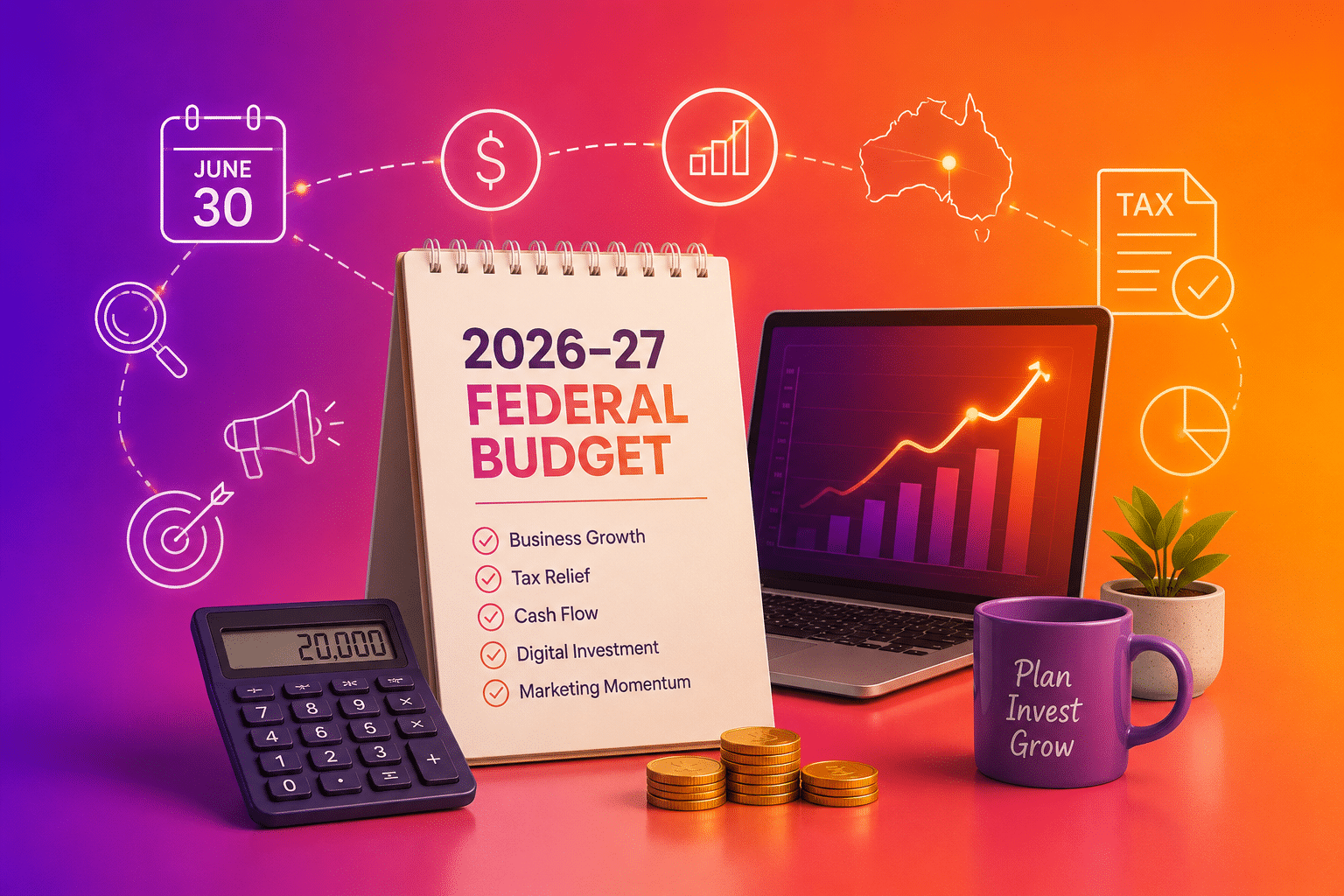
The 2026–27 Federal Budget creates several practical reasons for small businesses to review their marketing spend before the end of the financial year. Not because every business should spend more for the sake of it, but because some measures may make it easier to invest with more confidence.
For business owners who have been waiting for the right time to act, the budget offers a timely prompt.
1. The instant asset write-off is now permanent, and some marketing assets may qualify
The permanent $20,000 instant asset write-off is one of the key measures for small businesses.
Most business owners think of vehicles, tools, machinery or equipment. But some digital and marketing-related investments may also be worth discussing with your accountant, depending on what is being purchased and how it is used in your business.
Do not assume marketing-related investments are automatically excluded.
If you are planning to invest in digital assets before 30 June, ask whether any of those costs may qualify. This could include certain software, website infrastructure, CRM tools, booking systems, analytics platforms or other marketing technology.
Not every marketing expense will qualify, and tax savings should never be the only reason to invest. But if the business case already makes sense, the write-off may reduce the effective cost of acting this financial year.
2. Loss carry-back is returning, but recovery still needs revenue
The budget also reintroduces loss carry-back for eligible companies.
In plain English, this means an incorporated business that makes a tax loss may be able to apply that loss against tax paid in previous years, potentially creating a refund.
That can provide useful relief for businesses that have had a difficult period. But it is important to separate tax recovery from business recovery.
A tax refund can support recovery, but marketing helps rebuild future demand.
If revenue has dropped, your accountant can help you understand what can be recovered from the past. But your next step should be about rebuilding the pipeline.
For some businesses, that may mean using part of the refund to strengthen visibility, improve the website, restart paid search, invest in SEO, or reconnect with past customers.
The refund may help steady the business. Marketing helps create the next opportunity.
3. New start-ups are being encouraged, and established businesses cannot afford to disappear
From 2028–29, eligible start-ups will be able to claim refunds on tax losses, capped against fringe benefits tax and PAYG withholding paid on employee wages.
The government expects this measure to support around 25,000 new businesses.
For established small businesses, that matters. Many new businesses are digital from the beginning. They are comfortable using search, social media, automation, online reviews and paid campaigns to build attention quickly.
When established businesses reduce their visibility, they create space for newer competitors to be seen.
This does not mean you need to outspend every new business entering the market. But it does mean you need to stay present.
If your website is outdated, your content has gone quiet, your Google Business Profile has not been updated, or your competitors are appearing above you in search, the market does not pause and wait.
Customers will keep looking. The question is whether they find you.
4. Monthly PAYG instalments may make budgeting easier
From 1 July 2027, small and medium businesses will be able to move to monthly PAYG instalments, calculated through approved accounting software.
That may sound like a technical tax change. In practice, it could make cash flow easier to plan.
For many business owners, the biggest hesitation around marketing is uncertainty. They do not always know how much tax they need to set aside, how predictable their monthly cash flow will be, or whether they can commit to ongoing marketing without creating pressure later.
When cash flow becomes more predictable, marketing can become a planned investment rather than a reactive expense.
That shift matters because marketing works best when it is consistent.
SEO needs time. Paid campaigns need testing. Content builds authority gradually. Brand trust grows through repeated visibility.
A realistic monthly budget is often more useful than waiting for one large annual decision that keeps getting delayed.
5. Digital investment confirms where customers already are
The budget also includes investment in expanded Digital ID systems and “tell us once” digital government services.
While this may not sound like a marketing issue, it points to a wider reality: digital infrastructure is becoming the default way Australians interact, compare, enquire and make decisions.
Government is investing in digital systems because people expect faster, easier and more secure online experiences. Customers expect the same from businesses.
Digital visibility is no longer optional. It is part of how customers decide who to trust.
If your business is hard to find online, unclear once people land on your website, or less visible than your competitors in search, that is a commercial issue.
You may not need a full rebrand or website rebuild. But you do need to know whether your digital presence is helping people choose you, or making it easier for them to choose someone else.
What should you do before 30 June?
Before the end of the financial year, there are three practical steps worth taking.
- Ask your accountant about qualifying assets.
Do not ask generally whether “marketing” is deductible. Be specific. Ask whether any planned software, website infrastructure, digital tools or marketing technology may qualify under the instant asset write-off. - Audit your digital visibility.
Search the terms your customers would use to find your services. Check whether you appear, who appears before you, and whether your website clearly explains why someone should choose your business. - Build marketing into your monthly budget.
Do not treat marketing as a once-a-year decision. A smaller, consistent monthly investment is often easier to manage and more effective than sporadic bursts of activity.
A final thought on timing
In a cautious economy, marketing is often one of the first expenses to be cut.
That is understandable. Business owners want to protect cash flow, reduce risk and avoid unnecessary spending.
But staying quiet also has a cost.
When your business becomes less visible, competitors keep showing up. Customers keep searching. New businesses keep entering the market. The opportunity does not disappear; it simply moves to someone else.
The 2026–27 Federal Budget does not mean every small business should rush into new marketing spend. It does mean this is a sensible time to review your plans, check what may qualify, and decide whether your current visibility supports your growth goals.
At Spark Interact, we help businesses make practical, commercially grounded decisions about their marketing. If you are reviewing your EOFY plans and want to understand where your digital presence could be working harder, get in touch with our team.
We can help you assess your current visibility, identify priority opportunities and build a marketing plan that supports growth without losing sight of the numbers.
This article is general in nature and does not constitute financial or tax advice. Please consult your accountant or registered tax agent for advice specific to your circumstances.